Three reasons marketers get the B2B buyer’s journey wrong.
The buyer’s journey is not a funnel. It is a series of human moments shaped by motivators and barriers. When you map those truths, campaigns perform.
TL;DR
- Personas help, but they are not the journey. Map motivators and barriers.
- Buyers do not move in a line. Design for non‑linear paths and emotional states.
- Message maps need direction. Pair the right story to the right channel and moment.
What is a “three reasons” view of the B2B buyer’s journey?
It is a practical framework that names the three most common traps, then shows how to fix them. Start with real buyer motivators and barriers, not just personas. Build for non‑linear paths. Turn message maps into action by matching messages to channels and buyer moments.
We marketers are often guilty of pushing or pulling buyers through that inside‑out view of the customer’s world called the marketing funnel. Buyers are over it. What if we let them lead us? What if we could better connect with them to drive campaign results skyward?

By only focusing on static segmentation models and expecting a straight-line [buyer] journey, companies risk missing out on the deeper insights underpinning behavior — and the ability to drive new value and relationships.
Accenture1
Face down these three truths to drive higher marketing results
1.
Personas are a strong start, but often not enough
Personas are a valuable start. They tell us which buyers to target and why. But when we lean too heavily on static profiles, we miss that buyers are dynamic. Motivators push people toward purchase. Barriers can halt even the most attractive cycle.
Make it actionable: Interview buyers and sellers. Analyze win‑loss notes and search behavior. Cluster the motivators and barriers you hear most often. Use them to guide content and channels. For an example of aligning math and moments, see how we frame budgets in Market Math: Market Math™ calculates the budget you need.
2.
Buyer’s journeys do not follow the funnel
The funnel‑shaped journey is not a given anymore. Today’s buyers reorder steps. They skip stages. They move through emotional states based on motivators that move them forward, and barriers that stop progress.
Make it actionable: Replace a stage‑only map with a moments map. Plot emotional states and what helps at each point. For a deeper dive on this approach, read: Build B2B campaigns on true buyer journeys.
3.
Message maps need more
Message maps give teams the complete story of your value proposition. Components help writers stay consistent across video, white papers, and blogs. What they do not do by themselves is tell teams which parts of the story to deliver in which channels, or at which moment.
Make it actionable: Pair each priority message with a buyer moment and a channel. For instance, a testimonial might belong early if confidence is the barrier. A technical explainer might fit later if complexity is the barrier.
Build a clearer understanding of buyer moments
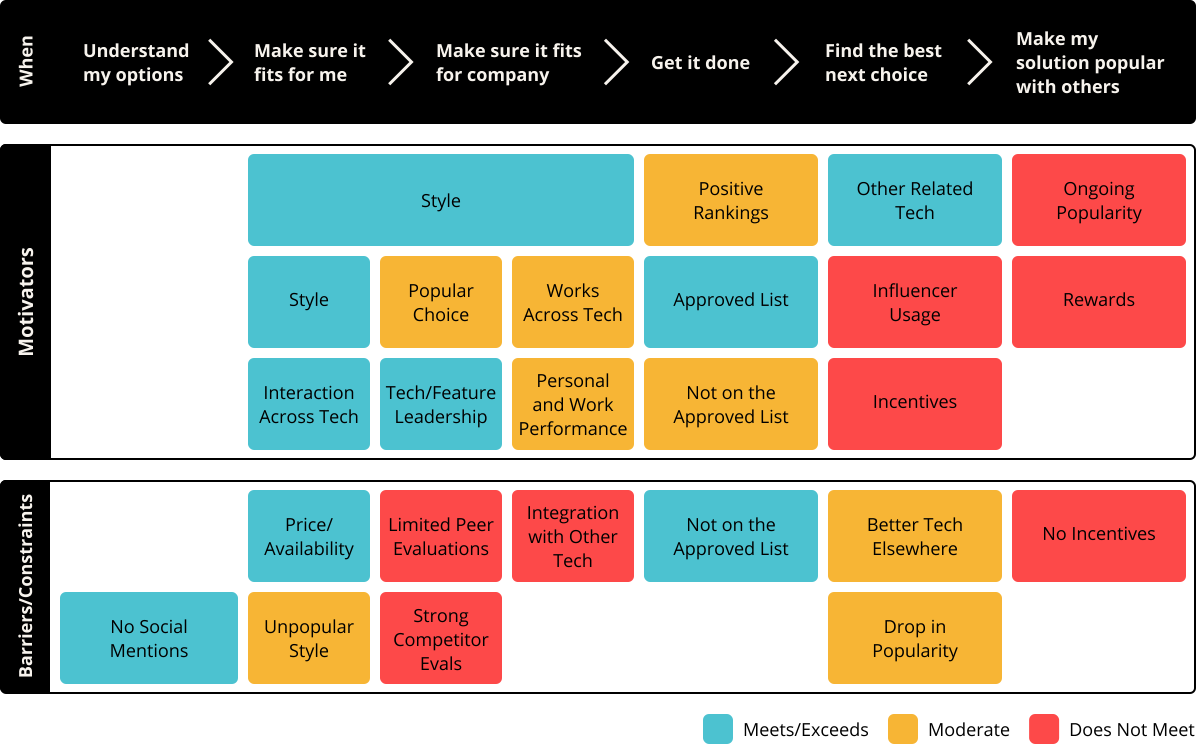
Uncover emotional states that buyers go through.
Start by asking buyers how they make purchases, from their perspective, in their words. A new employee choosing a laptop may not start with an approved list. Meet them where they begin.

Connect motivations and barriers to each emotional state.
Buyers have different journeys. This model reveals the parts of your story that matter most as people move through personal emotional states. Deliver hyper‑relevant content, not every feature at once.
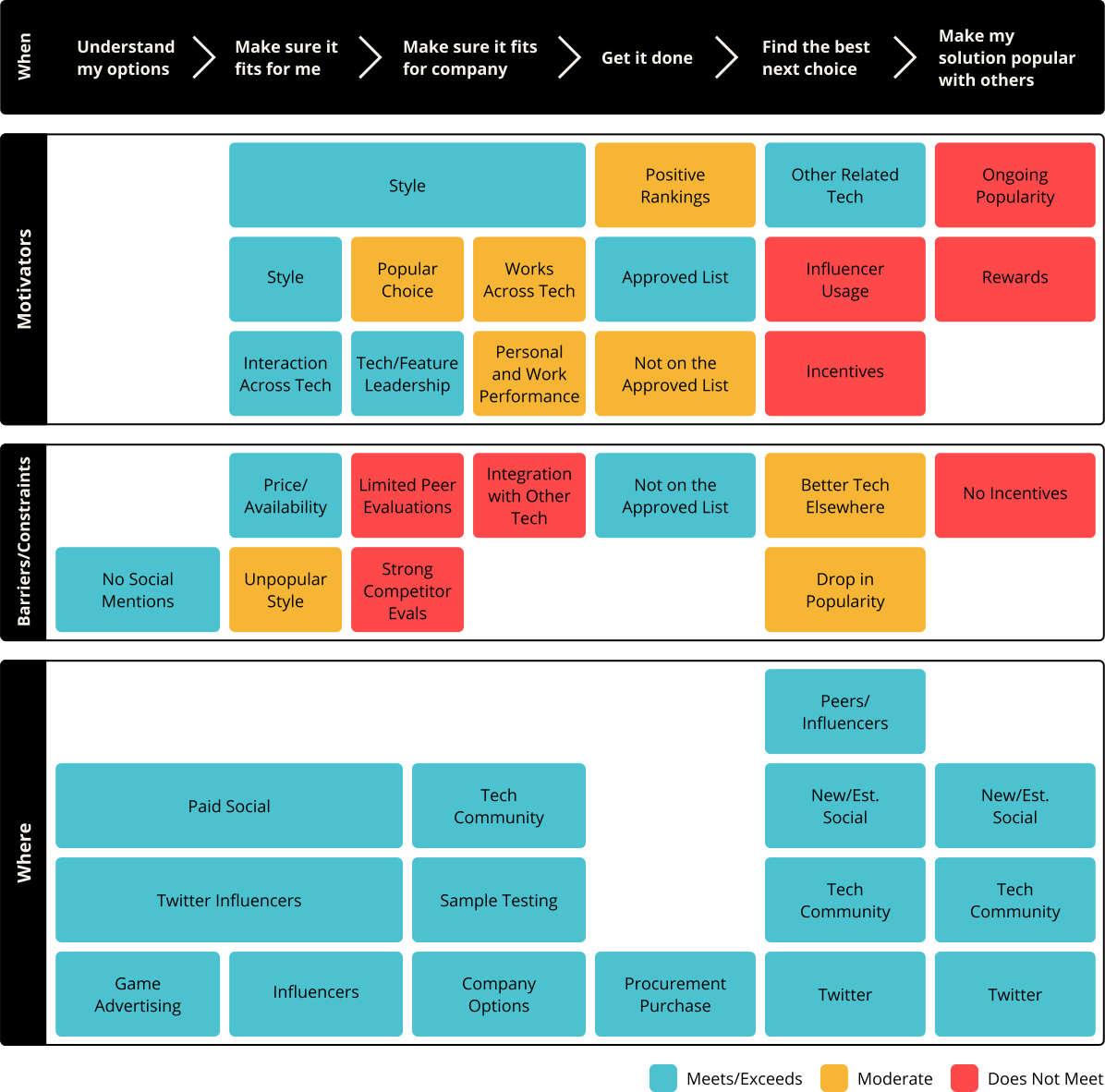
Understand where they learn about what.
Channels are no longer tied to funnel stages. They are tied to emotional states. Show up with the right content, at the right time, in the right place. In one example, Twitter and game advertising aligned to a narrow set of emotional states and motivators.
Live your killer truth
With each buyer experience, you can surprise people by giving them:
- What they want, the parts of the story they need
- When they want it, timed to their moment
- Where they want it, in preferred channels
By selecting the right content type, such as punchy video, dimensional mail, influencer content, or motion ads, you can create peak moments that amplify motivators or resolve barriers in surprising ways.

Caution:
The buyer experience journey approach requires checking assumptions.
Get over the funnel as the starting point for planning. Go beyond personas. Focus on emotional needs. Make more meaningful connections. Return better results.
Key takeaway
If you want performance, build journeys from real motivators and barriers. Plan for non‑linear paths, then point message maps at specific moments and channels.
FAQs
How do we move from personas to motivators and barriers without losing focus?
Keep personas for targeting. Add a short list of verified motivators and barriers per persona. Use interviews, win‑loss, search signals, and sales input to validate.
How do we build for non‑linear paths and still stay efficient?
Create a modular content kit. Map each module to a moment. Route distribution by signal, not by stage. Measure depth and spread across buying‑committee roles.
How do message maps connect to channels in practice?
For each priority message, specify the buyer moment, the channel, and the next action. Example: confidence barrier, early stage, testimonial video, click to case study.
1 Accenture, “The human paradox: from customer-centricity to life-centricity,” 2022
Published October 2023. Updated November 2025.