The lost art of campaign journey mapping

Journey maps are not paperwork. They are the operating system for campaigns that move what matters, faster.
TL;DR
- See the whole system. A journey map connects goals, audiences, channels, and KPIs on one page, so decisions get easier and smarter.
- Design for agility. Plan the path, then let data reroute you in real time, without losing the plot.
- Align the business. A visual map builds shared understanding across marketing, sales, and leadership, which accelerates approvals and outcomes.
- Make it reusable. Treat every map like a playbook you can localize, repurpose, and scale across teams.
What is campaign journey mapping?
Seeing the whole picture
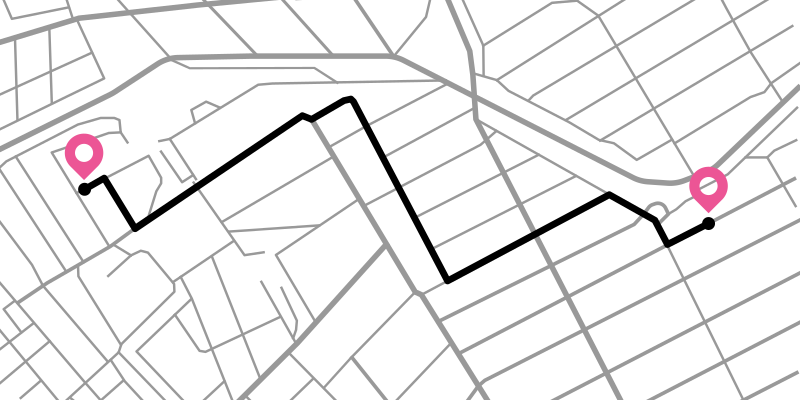
Remember paper atlases. You saw the route and the detours. A good journey map gives you that same view. It keeps you from designing a campaign around isolated deliverables. Instead of “we need a white paper, a landing page, and some ads,” you build a connected experience across the full funnel, from awareness to purchase, then back through the loyalty loop.
From wireframe to working map
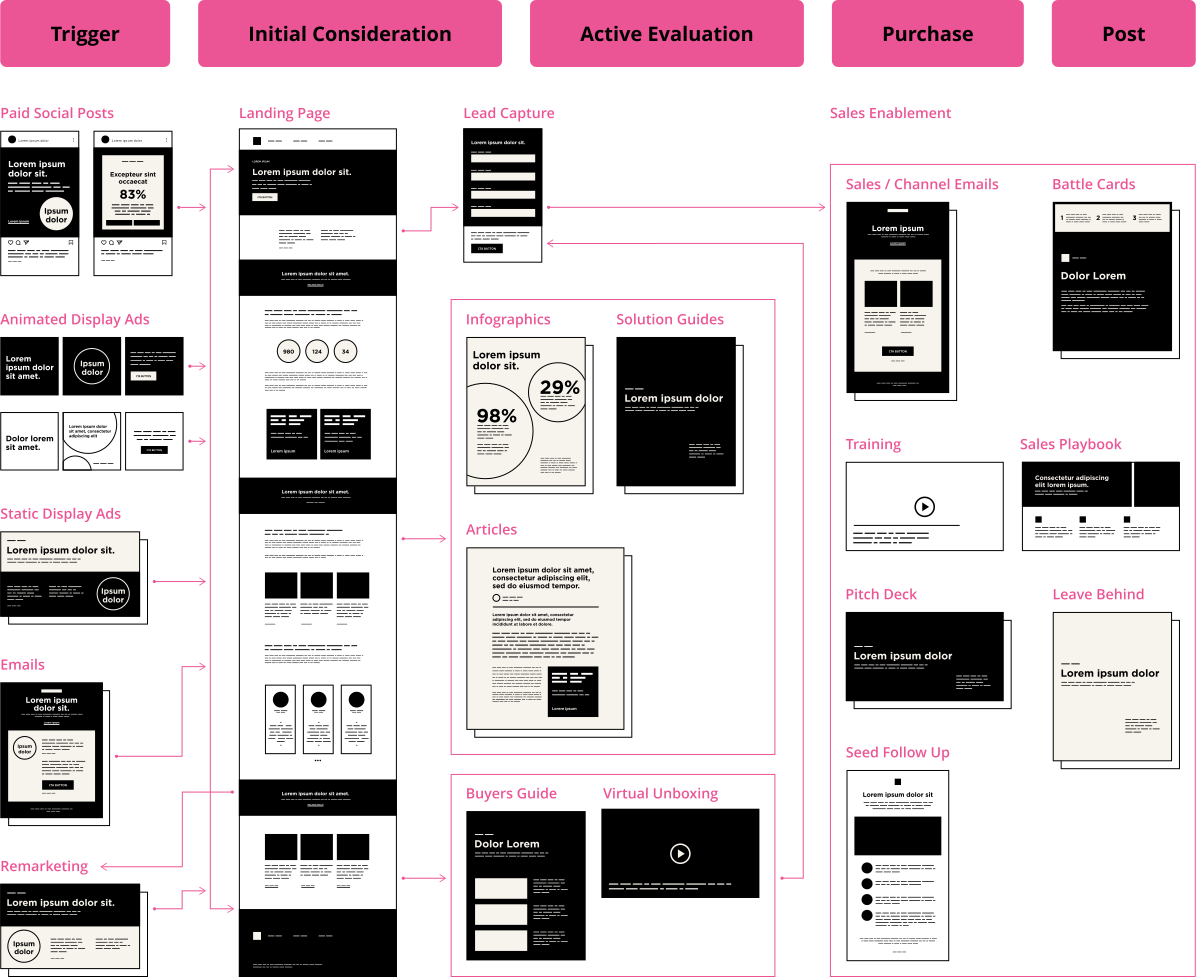
We start by sketching a simple wireframe of the journey: audiences, messages, channels, assets, and measurement. We answer core questions up front: Who are we reaching. How will we deliver value. What assets earn the next click. What cadence keeps attention. What will we measure, and when.
Once the campaign is live, we replace placeholders with final creative and KPIs. The map evolves from an outline to a working model of the customer experience.
Why it accelerates alignment
A concise map travels well. Marketing can share it with sales and leadership to align goals, clarify scope, and make the case for budget. Because the strategy, timeline, and spend live in one place, reviews move faster, and production stays focused.
Guided by analytics, driven by humans
Great maps do not lock you in. They give you confidence to adapt. As performance data arrives, you add, skip, or resequence tactics to match how customers actually behave. If one asset underperforms, you pivot without losing the narrative or overreacting to a single data point.
Reuse it like a playbook
A strong journey map outlives the first launch. Global teams can localize it, swap in market-specific assets, or reframe the message for new segments. Because it is visual and modular, the map doubles as onboarding for cross-functional partners and as a reference for your next campaign.
A simple 5-step checklist
- Frame the audience and goal. Define the segment, problem to solve, and the one action that signals success.
- Sketch the stages. Map awareness, consideration, decision, and loyalty. Note questions buyers ask at each step.
- Pair messages with assets. Match a primary message and one asset per stage. Keep CTAs consistent.
- Choose channels and cadence. Select 2–3 channels per stage, then set a weekly or biweekly rhythm.
- Instrument KPIs and owners. Assign metrics, thresholds for pivots, and accountable owners before launch.
Key takeaway
Maps create momentum that matters. Put the plan on one page, then use it to move with clarity, speed, and purpose.
FAQs
How detailed should a campaign journey map be?
Detailed enough to show stages, audiences, messages, assets, channels, KPIs, budgets, and timing. Keep it scannable. If it takes longer to read than to explain, simplify it.
How often should we update the map once a campaign is live?
Review weekly at minimum, then adjust when data shows a clear pattern. Treat the map as a living model. Lock the strategy, not the sequence.
What tools do we need to build and maintain it?
Any tool that supports shared visualization and version control. The critical piece is governance. Assign owners for strategy, creative, analytics, and approvals, then keep the map current.
Published June 2023. Updated November 2025.