Strategy
3 reasons to quit stalling and build a B2B messaging platform

May 2023
Messaging is not a scramble. A platform turns your value into clear, reusable language that speeds content, aligns teams, and lifts results.
TL;DR
- Stop the scatter. A platform prevents ad‑hoc messages that slow teams down.
- Build pillars from audience value, not features. Start with why, then what, then how.
- Make it modular. Map messages to channels and buyer moments so every asset stays consistent.
What is a B2B messaging platform?
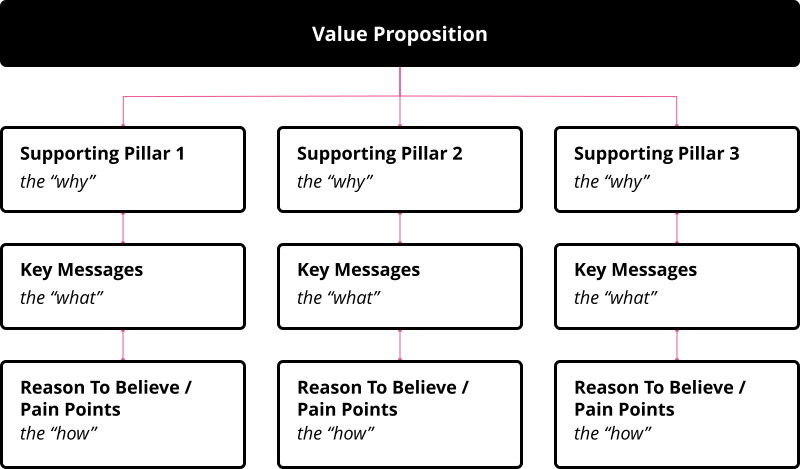
A messaging platform is a living document that lays out your value proposition, pillars, and proof points. It includes short and long forms writers can pull into any asset. It flows from your brand platform, so you start with the overall why, then define pillars, then write the language your teams can reuse at speed.
When you have exciting news, it is human to share it everywhere, fast. B2B messaging is different. Without a platform, you are creating messages scattershot, scrambling to connect this campaign with that white paper with last year’s video. It may feel nimble, but results slow down.
1. Personas are not enough, pillars do the heavy lifting
Personas tell you who to target and why. Lean too hard on static profiles, and you miss that buyers are dynamic. Build pillars that translate audience value into crisp messages, then back them with proof.
Structure each pillar:
- Why. Start with the audience’s urgent need or aspiration.
- What. Explain how you help them achieve that why.
- How. Add the features that make the what possible.
Each what may have many hows. The platform organizes detail you already have so anyone can leverage it. Tie pillars to real motivators and barriers from your true buyer journeys, so language reflects how people decide, not how you present.
2. A central framework speeds creation and boosts consistency
It takes time to build the platform. You earn that time back with every asset.
Need a mid‑funnel eBook. One pillar already frames how your offering addresses that need, with research, explanations, and phrasings pulled from prior work. Writers start from aligned language, produce faster, and move on to the next piece that reinforces the same story.
Most companies use a mix of in‑house writers, agencies, and contractors. A platform gives everyone the same source of truth. It reduces rewrites and false starts, and it keeps sales and marketing aligned.
3. Message maps need direction, not just content
Message maps hold your full story. On their own, they do not tell teams which parts to deliver in which channels, or when.
Use your platform to pair messages with channels and buyer moments. A testimonial might belong early if confidence is the barrier. A technical explainer might come later if complexity is the barrier. Plan for non‑linear paths, then route messages by signal, not by a rigid stage.
Build your platform without the busywork
- Start with the brand. Anchor value prop and tone, then cascade pillars and proof.
- Co‑create with product and sales. Capture field language and objections.
- Write once, reuse often. Provide short and long forms, headlines, and CTAs per pillar.
- Instrument for speed. Store in a shared location with version control and governance.
If you need help framing assumptions and outcomes, align your planning with your strategy partners in Marketing Strategy.
Key takeaway
A messaging platform makes every message faster and every interaction clearer. Build pillars from buyer value, map them to moments, and give writers language they can reuse with confidence.
FAQs
How detailed should a pillar be without becoming a spec sheet?
Keep the why and what tight. Limit hows to the features that prove your promise. Move deep technical detail into expandable proof sections.
How do we keep the platform current across teams and agencies?
Assign an owner. Track changes. Update quarterly or after major launches. Share a single source with read‑only access and request workflows for edits.
How do we connect the platform to real buyer behavior?
Validate language in interviews, win‑loss reviews, and search signals. Map messages to moments in your buyer journeys so teams know what to say, where, and when.
Published May 2023. Updated November 2025.
Ready to turn your story into a platform teams can use at speed?