

StudioNorth
Brand Visibility Audit
The StudioNorth Brand Visibility Audit is a research-based framework that helps marketing and sales leaders understand how their brand is perceived and discovered, and where greater clarity can create competitive advantage.
What is the StudioNorth Brand Visibility Audit?
The StudioNorth Brand Visibility Audit is a research-driven assessment of how clearly a brand shows up across modern B2B buying environments. It evaluates signals across both human and AI. These are the same signals buyers rely on when forming early opinions, comparisons, and recommendations.
Rather than measuring awareness alone, the Audit focuses on clarity, coherence, and confidence, helping leaders understand whether their brand is visible and understood.
How the Audit is built
The Audit is grounded in independent research with a consistent, repeatable methodology.

Public Market Signals
Analysis of publicly verifiable signals your brand puts into the market.

Clarity & Activation Analysis
Structured analysis of narrative clarity, presence, and activation.

AI Discovery Research
Research into how AI systems surface, summarize, and interpret brand information.

AI Discovery Research
Evaluation of human-facing signals that influence trust, recall, and confidence.
Understanding your scores
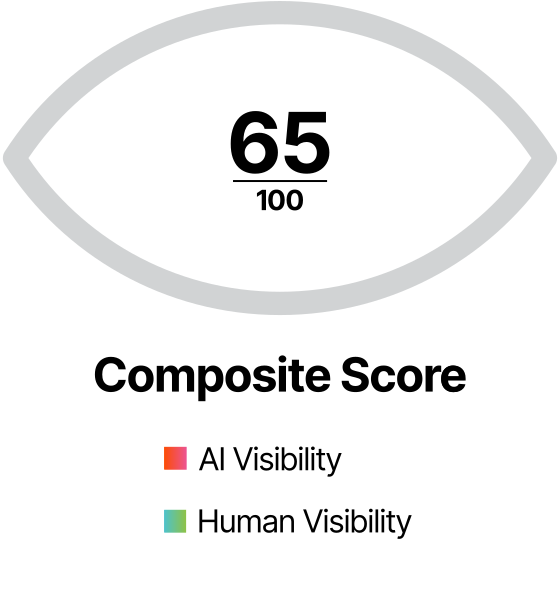
Composite Score
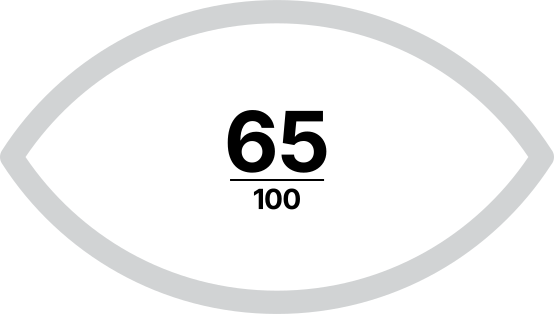
Provides a single, comprehensive view of how your brand is currently perceived and discoverable across both human and AI-driven touchpoints.
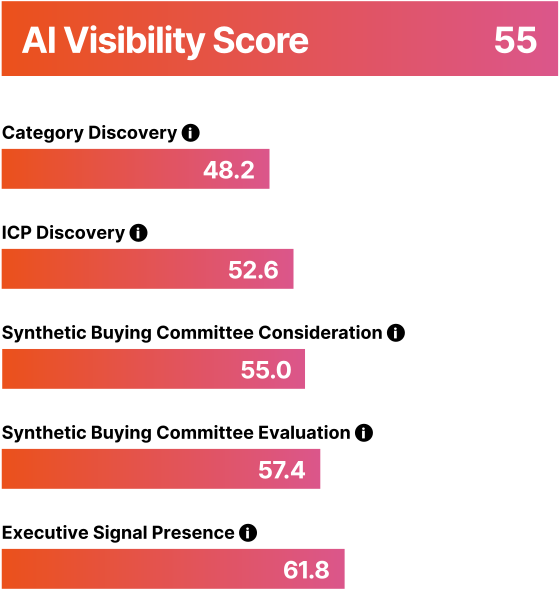
AI Visibility Score
Measures how effectively your brand is discovered, interpreted, and evaluated by AI-driven systems, based on research into how these systems surface, summarize, and compare brands.

Human Visibility Score
Reflects how clearly your brand is perceived, understood, and trusted by people, based on independent research into the signals that shape human judgment.
Your category score
A score gains meaning when viewed within your category. The StudioNorth Brand Visibility Audit includes Brand Visibility Category Indexes that show how leading brands compare within specific markets.
This comparison turns visibility into a strategic signal, not just a number.
Category context helps leaders:
- Understand how their brand compares to peers
- Identify gaps between intention and perception
- See early signals of opportunity or risk before demand is active
How leaders use the StudioNorth Brand Visibility Audit
Leaders use the Brand Visibility Audit to understand how clearly their brand shows up at the moments that determine inclusion, preference, and trust.
For organizations expanding into new markets, this often includes understanding whether, and why, their brand appears on vendor shortlists during early RFP and procurement stages. When evaluators can’t clearly find, interpret, or validate a brand’s positioning, that brand is often filtered out before formal consideration begins.
In these cases, the Audit helps teams see where visibility gaps may be limiting shortlist inclusion, especially across geographies, buying committees, and AI-mediated discovery. It also highlights which signals matter most to strengthen recognition and confidence as brands enter new categories or regions.
The Brand Visibility Audit provides strategic insights when brands are:
- Entering a new geographic market and assessing shortlist readiness
- Evaluating whether brand signals align with how buying committees research vendors
- Understanding how AI systems surface and summarize a brand during early discovery
Leaders Typically Discover:
- Gaps between AI and Human visibility
- Strong execution paired with unclear narrative
- Signals that are well understood internally but difficult to find externally
- Early indicators that affect preference long before a buying cycle begins
Request your Brand Visibility Audit
Want to understand how your brand shows up before buyers ever talk to sales? Request your StudioNorth Brand Visibility Audit to get a deeper view of how your brand is perceived, discovered and evaluated across human and AI-driven buying environments.
The StudioNorth Brand Visibility Audit is based on independent research and observable market signals. Scores reflect a point-in-time view and are intended to support informed discussion and strategic decision-making. Categories reflect how brands are evaluated in-market and may evolve as buying behaviors and technologies change.